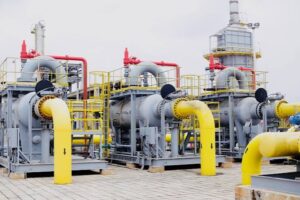
The Tema Oil Refinery is expected to play a renewed role in Ghana’s downstream petroleum sector as government pushes to process more crude oil locally and reduce the country’s dependence on imported refined petroleum products.
President John Dramani Mahama first announced that Ghanaian crude from the country’s offshore fields would be delivered to the Tema Oil Refinery for processing from June 2026. He said the move was part of a broader plan to ensure that Ghana derives greater value from its natural resources instead of exporting raw materials and importing finished products at a higher cost.
The announcement was significant because TOR has faced years of operational challenges, periods of inactivity, and concerns over its ability to contribute meaningfully to national fuel supply. Bringing the refinery back into active crude processing is therefore being positioned as both an industrial revival and an energy security strategy.
According to the Public Services Commission, TOR received a shipment of one million barrels of crude oil on May 27, 2026, and successfully restarted refining operations on June 3, 2026. The crude cargo was identified as Bonga crude, a premium Nigerian light sweet crude purchased from Shell under a tolling arrangement with Fujeirah/Triangle Commodities Trading.
The refinery’s restart follows major turnaround maintenance works on its Crude Distillation Unit, which were carried out between August and October 2025. Regulatory inspections were also completed by the National Petroleum Authority before TOR was cleared to resume operations.
Government officials say the return of TOR to refining activity is important for three main reasons: reducing Ghana’s dependence on imported refined fuel, strengthening national energy security, and keeping more value within the local petroleum economy. A functioning refinery also has the potential to support jobs, technical skills, local service companies, and more stable domestic supply.
However, there is an important distinction in the story. The first crude processed after the restart was not Ghanaian crude, but Bonga crude from Nigeria. The plan is for TOR to receive a second consignment made up of locally produced Ghanaian crude as part of government’s broader strategy to refine more of Ghana’s own crude resources.
Citi Newsroom later reported that President Mahama said TOR had resumed crude oil processing after completing its first major turnaround maintenance in four years. He added that plans were underway to improve the refinery’s operational efficiency and increase its refining capacity, with TOR expected to receive Ghana’s own crude once it fully ramps up capacity in July.
This means the TOR story is not just about restarting a refinery. It is also about whether Ghana can build a stronger local refining chain at a time when fuel prices remain vulnerable to global crude oil movements, exchange rate pressures, and international supply risks.
The development also fits into government’s wider petroleum agenda. In the same period, President Mahama broke ground for Phase 2 of the Sentuo Oil Refinery Project in Tema, which is expected to expand Sentuo’s capacity from 40,000 barrels per day to 100,000 barrels per day when completed. The Presidency said the project followed the delivery of the first-ever Jubilee crude oil for local refining at the facility.
Together, the restart of TOR and the expansion of Sentuo show that Ghana is trying to strengthen its domestic refining base rather than relying almost entirely on imported finished petroleum products. If sustained, this could help Ghana retain more value from its crude oil, improve fuel supply resilience, and support industrial growth.
The challenge, however, will be consistency. TOR’s long-term impact will depend on reliable crude supply, strong management, technical efficiency, funding, maintenance discipline, and the ability to operate commercially without returning to old cycles of shutdowns and debt.
For now, the key message is clear: Ghana is attempting to bring local refining back to the centre of its oil and gas strategy. TOR’s return to crude processing is an important step, but the real test will be whether the refinery can operate continuously, process Ghanaian crude at scale, and contribute meaningfully to national fuel security.